Why a stainless steel square tube RFQ needs more than a size
A useful stainless steel square tube RFQ lets technical and commercial reviewers price the same item. The phrase stainless steel square tube identifies a category, not a complete specification. Put the application, geometry, material basis, finish, fabrication, acceptance evidence, quantity and logistics into controlled fields. Mark unknowns instead of filling them with assumptions.
An archived legacy source previously presented the referenced square-tube category name in YUHUA product information; that record is pending mandatory re-verification and cannot establish current product scope, availability or company capability. It does not authorize a company size range, tolerance, standard, certification, capacity, MOQ or lead time. The RFQ should therefore ask for current written confirmation and require every proposed deviation to be visible.


Define service and design responsibility
Describe the component and where it will operate. Include indoor or outdoor exposure, moisture, salts, chemicals, cleaning, temperature, appearance expectations and the consequence of failure. Name the party responsible for final material and design approval. A supplier can answer manufacturing or sourcing questions, but should not silently inherit an undefined engineering decision.
If the design is still open, say which fields are options and which are mandatory. Ask bidders to quote the baseline first. Alternatives can follow as separate lines with a reason, technical effect and price difference. This preserves a fair comparison while allowing useful proposals.
Write geometry in separate controlled fields
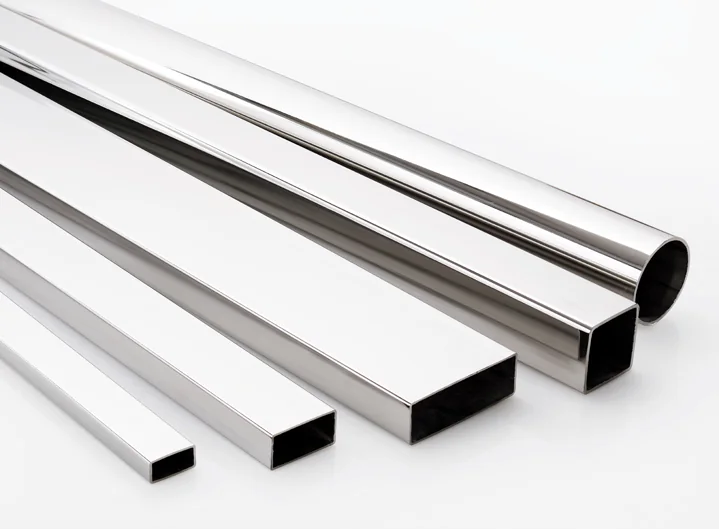
For stainless steel square tube, state every outside dimension, wall, length and quantity with units. Show orientation, datums and visible faces on the drawing. Add requirements for straightness, twist, corner condition, cut length or hole location only when they protect the assembly. Cite the tolerance source instead of using words such as precise or standard.
Use one item number across the drawing, schedule and quote. If several lengths or finishes are needed, create separate lines. That small discipline prevents a supplier from averaging requirements and makes receiving inspection far easier.

State material and standards without shortcuts
Give the approved designation or describe the conditions that require technical selection. Identify the product standard and edition only after confirming that its scope matches the item. If a dimensional standard or project specification also applies, list its role. Resolve contradictions before award.
Do not request certification by acronym alone. Name the exact document, inspection result or certificate scope required for acceptance. Ask the offer to confirm inclusion and identify anything that will be supplied only after order placement.
Control surface, fabrication and packing
Mark visible faces, finish direction and protected areas. Describe cutting, bending, welding, polishing, deburring and end preparation that belong in the supplier's scope. Where a physical finish sample controls appearance, record its identifier and approval revision.
Specify protective film, separators, bundle limits, moisture controls or labeling only as the project needs them. Packing is part of product preservation and freight planning. It should not be left to an unstated default when the surface is visible or the journey is demanding.
Build a practical inspection and document matrix
List each characteristic, the acceptance basis, the checking party and the record required. Separate routine receiving checks from witness points or third-party inspection. Decide how material identification and records will stay linked to the delivered bundle or item.
Avoid indiscriminate testing. Extra tests add cost and time without value when they do not support a real risk or requirement. The goal is a sufficient evidence package: clear enough to accept or reject the item without relying on memory or marketing language.
Normalize quotations before selection
Compare line descriptions, quantity, usable length, finish, tests, records, packing, freight basis, payment terms, validity, schedule and exclusions in aligned columns. Highlight blanks. A price is not comparable when its technical or documentation scope differs.
Close every critical deviation before issuing the purchase order. Carry the final item number and revision into order acknowledgments and inspection records. The resulting chain is simple: requirement, offer, approval, order and delivery all refer to the same controlled description.
- Application and design owner
- Profile geometry, wall, length and units
- Material designation or selection basis
- Standards and controlled editions
- Finish, fabrication and visible faces
- Tests, traceability and records
- Quantity, packing, destination and schedule
- Assumptions, deviations and exclusions
Carry the approved RFQ into the purchase and receiving stages
An RFQ loses value if the approved details disappear when the order is raised. Copy the final item identifier, drawing revision, document references and accepted deviations into the purchase order or its controlled attachments. Ask the supplier to acknowledge that same package. If the acknowledgment introduces a new exception, send it back through technical and commercial review before work proceeds. Silence is not acceptance.
Create a simple pre-shipment checklist from the RFQ. It can cover identification, quantity, key dimensions, visual condition, required records, labels and packing. Assign who reviews each item and when. Where the project has a witness or hold point, state what release evidence is needed. This reduces last-minute arguments about whether a document or inspection was included in the quoted scope.
At receiving, inspect against the approved order rather than the early inquiry draft. Record the instrument and datum for dimensional checks, preserve photographs only as supporting evidence, and link nonconformities to the affected item numbers. Close discrepancies through an authorized disposition. The resulting record shows whether the delivered scope matches the bought scope and gives the team a factual baseline for future supplier evaluation. After completion, note which RFQ fields produced clarification, delay or price variation. Update the worksheet labels and guidance, but do not turn one order's accepted deviation into a default for every future project. Each new inquiry still needs its own technical basis, named approval owners and current written confirmation before a purchase decision.
Technical references
Questions buyers ask
What is the minimum information for an RFQ?
Provide the application, profile, dimensions, wall, length, quantity, material basis, finish, standard or drawing, evidence needs, packing and destination. Mark any field that still needs technical confirmation.
Should alternatives be allowed?
They can be useful, but request the baseline first. Put every alternative on a separate line with its technical effect, evidence and commercial difference.
Can archived YUHUA material establish current product scope?
No. An archived legacy source previously presented the referenced square-tube category name in YUHUA product information; that record is pending mandatory re-verification and cannot establish current product scope, availability or company capability.
How are quote omissions handled?
Treat a blank critical field as unresolved, not accepted. Ask for a revised written response and carry agreed deviations into the purchase order.